


Military Working Dogs
Introduction
By David Wiggins - Curator
On 26 August each year, International Dog day is observed to recognise and celebrate all dogs, the variety of breeds, recognition of working dogs and to raise awareness for canine welfare.
Canine welfare is especially important in the work of the Royal Army Veterinary Corps (RAVC). The RAVC has had a long working relationship with ‘man’s best friend’ and to this day is involved in all aspects of its training and welfare. Whilst dogs have been used in warfare dating back to antiquity, the use of the dog as an integral part of the British Army did not come to realisation until the First World War.
From then on, our dogs have been used for a variety of roles including search and rescue, tracking, sentry duties and even just companionship to a solider in a foreign land far from home.
Early Training
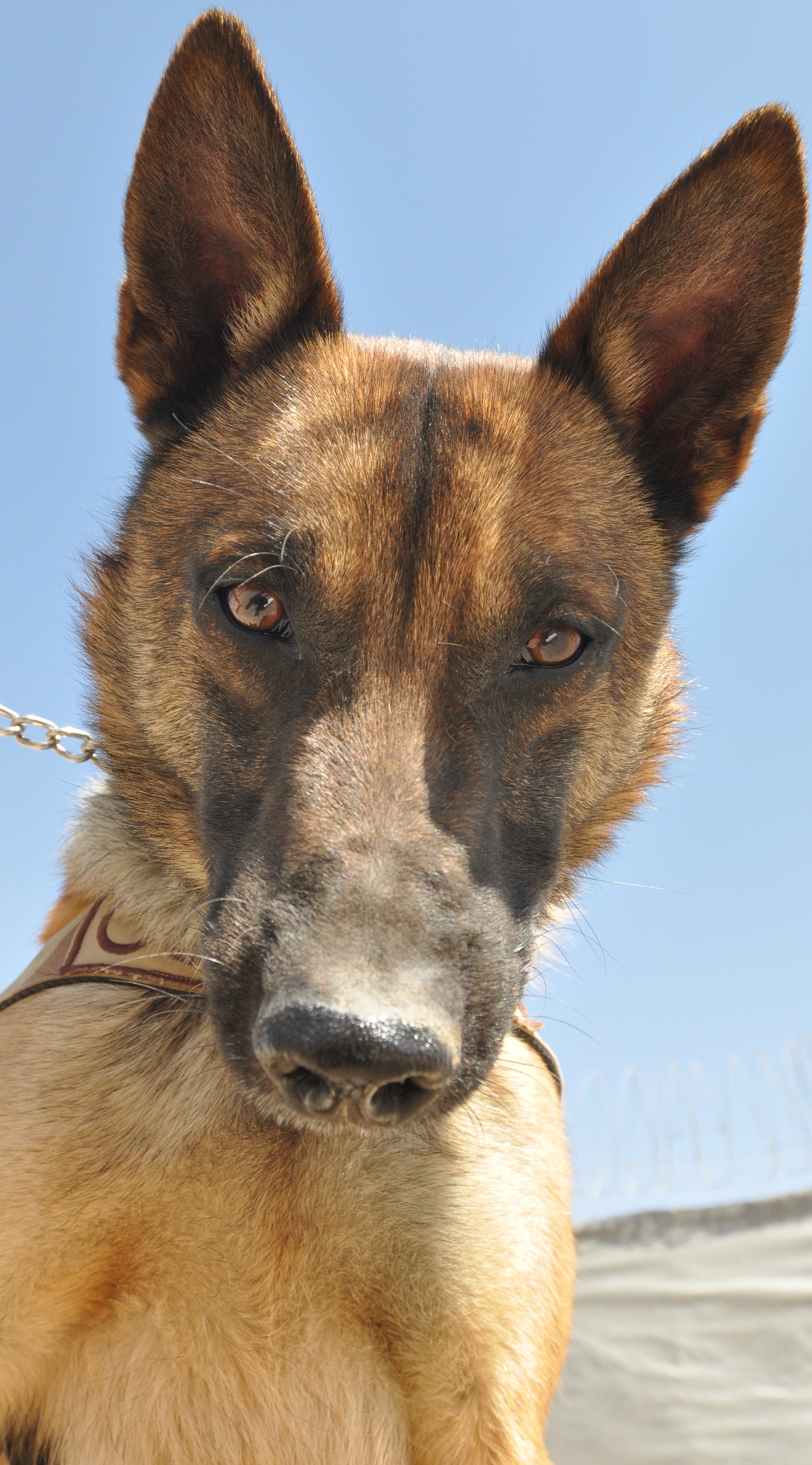
With the outset of war in 1914, it was the German and Italian armies that were pioneering the use of dogs within the army, the former purchasing a number of British dogs to fill the ranks. Advocating the use of dogs within the British Army fell to Lt. Col. E.H. Richardson who demonstrated the worth of the dog to the War Office. With his own dog training school, Richardson’s idea of the dog being a functioning use by the British Army was initially rejected by the War Office who did not believe dogs could be of any useful service. Despite this rebuttal, Richardson nevertheless found his dogs in demand from individual troops.
In 1917, having seen the dog’s worth, the War Office created the first British War Dog School.
.jpg)
Messengers on the Front
The development of trench warfare which characterised the fighting of the First World War, it was vital for messages to be transmitted across the large, connected trench system. Traditional communication between the trenches was via a wired connection. If these went down a dog could be harnessed with a reel of telegraph wire on its back and be sent over no man’s land. A dog’s low height and its typical dark drab colouring would often make it harder to spot than a soldier performing the same task. The weight of a telegraph reel often meant that only short distances could be covered. Dogs however could convey messages in specially designed collars that written communication could be placed into, the museum has one such collar in its collection. A dog’s natural ability to cover long distances in a shorter time than a human counterpart and their innate sense of direction helped justify their importance in the war. The sight of a dog in the trenches also had the added effect of boosting the morale of beleaguered soldiers who would often at times pet and feed scraps to the dogs despite it being a punishable offence to distract a dog whilst performing its messenger carrying duties.
By the end of the First World War it was estimated that a combined force of 20,000 dogs were being used by the British and French armies with conservative figures of dogs being killed by enemy action at 7,000, however, this figure is likely to have been much higher.

Helping the Wounded
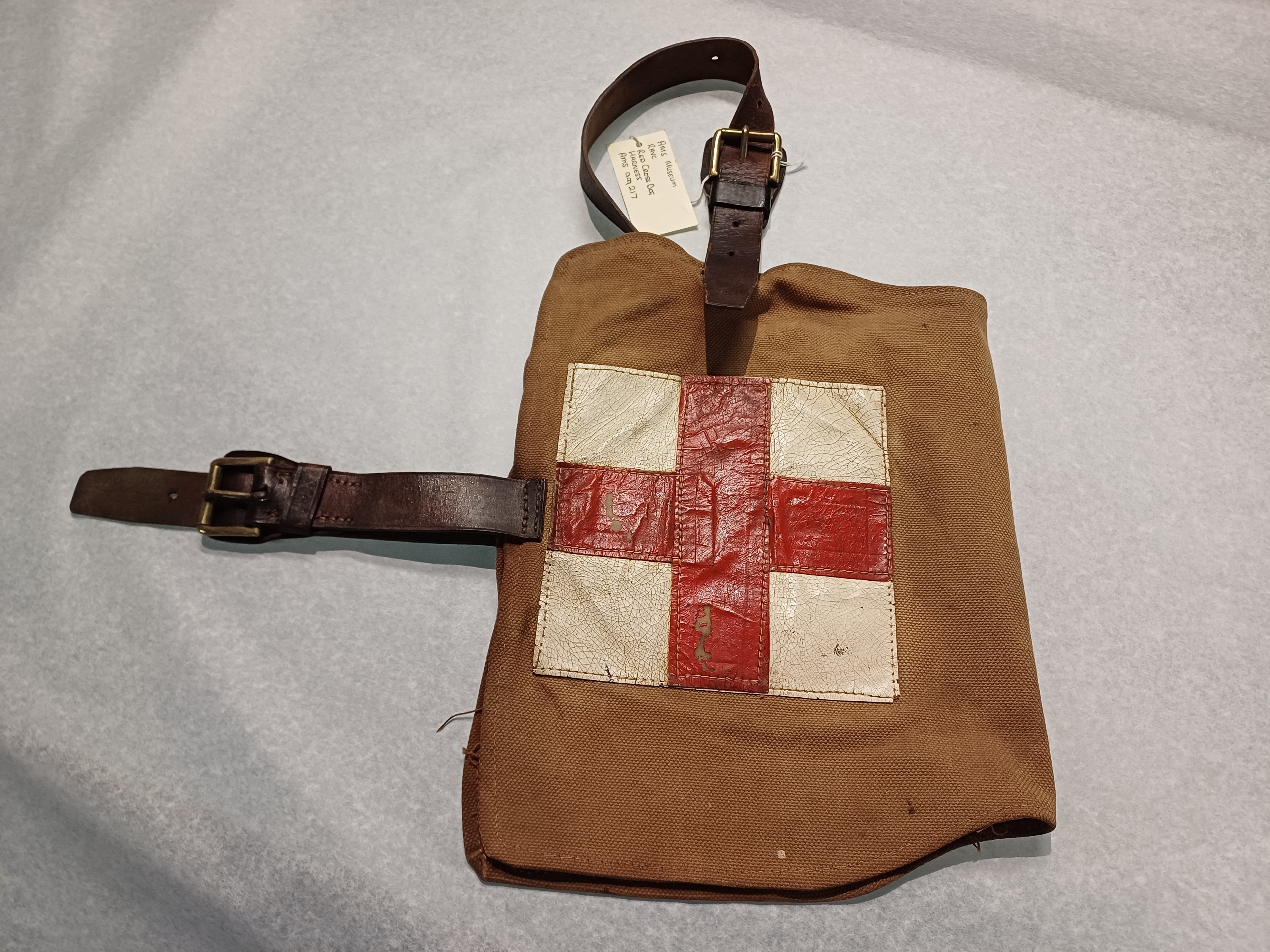
During the First World War it was the role of the stretcher bearer to go into ‘No Mans Land’ to attend to the wounded and dying. Under the Hague and Geneva conventions clearly marked medical personnel could not legally be targeted, however this was not always the case. This meant tending to the wounded was often fraught with danger and at considerable risk to the medic. Searching for wounded was often complicated by the dark, cold, wet and muddy battlefields under the threat of enemy fire. It was therefore devised that dogs could play the important role of searching for the wounded and alerting medical personnel. “Red Cross Ambulance Dogs” were sent in with water and medical supplies a dog could locate the wounded, return to the handler and lead the rescue party to the wounded soldier.
Again, Richardson’s dog school proved invaluable in training dogs to remain silent as to not alert the enemy and were often trained amongst the noise of marching soldiers, alarms and even the firing of blank shots so they would come accustomed to the noises of the battlefield before being deployed.
Mine Detection
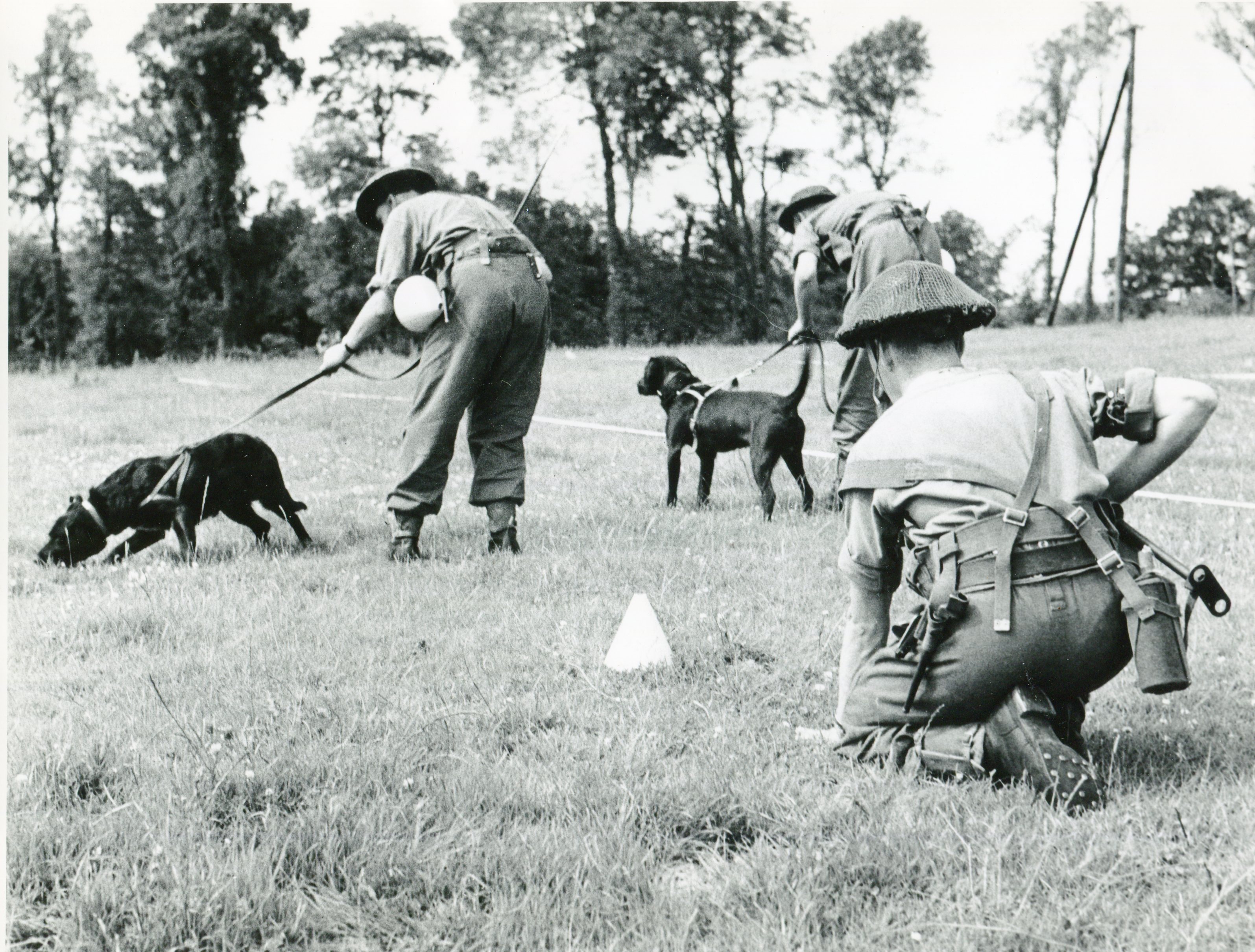
With the advent of anti-personnel mines, dogs once more showed their expertise in tracking and alerting their handlers to the presence of mines in an area of conflict. Dogs trained specifically in mine detection were used throughout the Second World War, with the mines themselves often case in a material such as glass, plastic or wood which would make them harder to detect with traditional mine detectors. Dogs were trained using treat based rewards to freeze on the discovery of a buried mine which would alert the handler to the presence of anything suspicious.
Notably in the days after D-Day where trained dogs were to search for land mines left during the retreat of the German Army, with each platoon consisting of 29 dogs designed solely for tracking of mines and with each dog able to cover an area of around 1600 metres a day.
Tracking
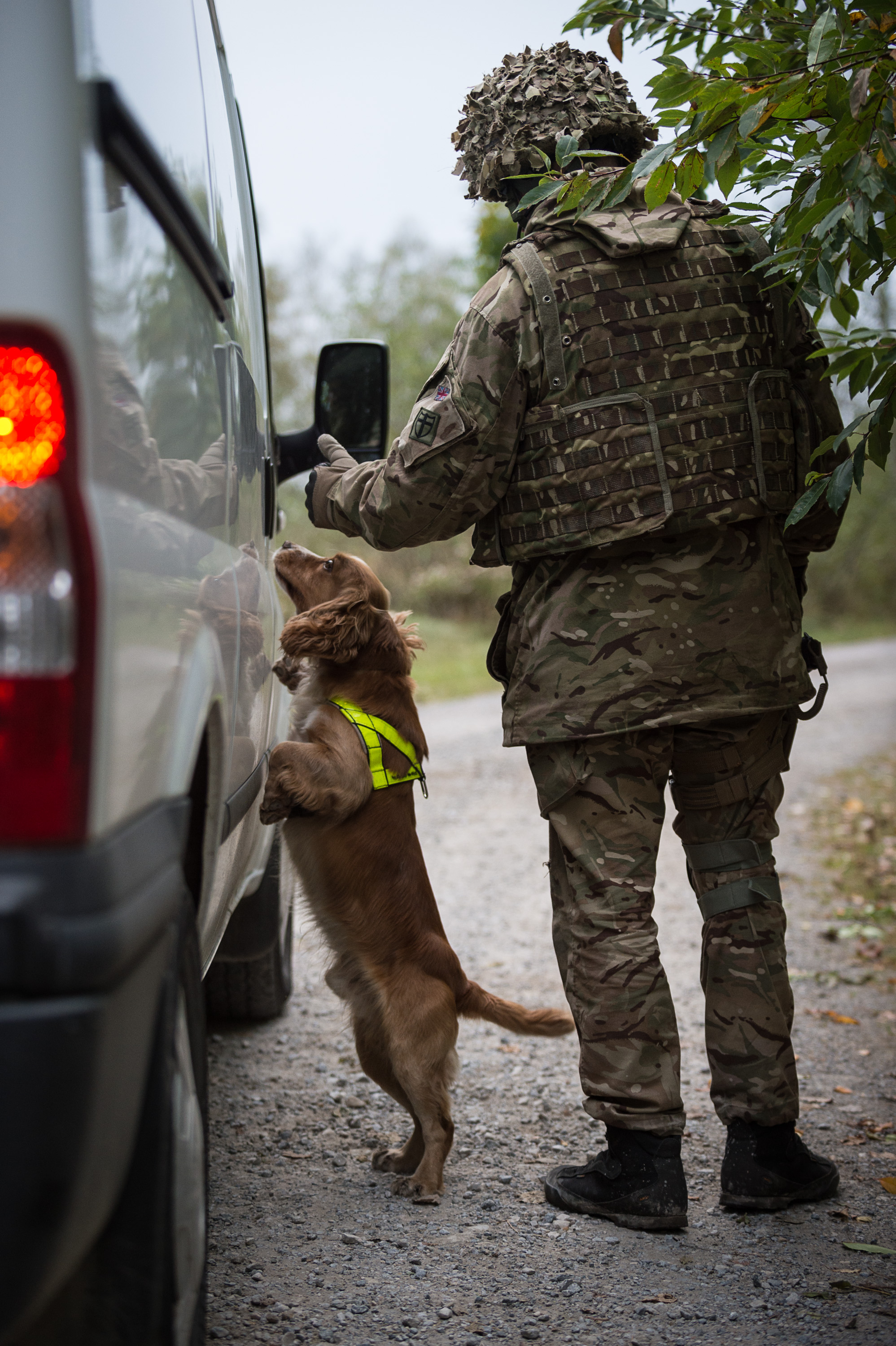
Dogs not only were useful in tracking of mines but also for tracking of enemy combatants and for sentry duty. After the Second World War, Britain was engaged in many conflicts around the world fighting an enemy using unconventional battle tactics and engaging in guerrilla warfare. In the thick jungles of Borneo dogs could cover large distances with a dog handler and armed soldier to track down enemy insurgents.
Closer to home, Dogs proved to be invaluable in counter-insurgency strategies such as the detection of explosives and arms caches. The dog’s unique sense of smell could be use to detect the presence of certain chemicals found in explosives and weapons.
In more recent campaigns dogs were used in Iraq and Afghanistan to detect not only explosives and weapons but also illegal drugs that were used to fund terrorist activity in the region.
Gallantry
A number of four legged friends have received the highest gallantry award available to animals, called the PDSA Dickin Medal. The Medal was instituted in 1943 as a special award to recognise any animal displaying conspicuous devotion and gallantry while associated with the Armed Forces or Civil Defence Units. A number of dogs have serving the British army have received this award over the years including army dogs Sam, Sadie and Buster.
Army Dog Sam was recognised for two documented incidents during April 1988 during conflict in Bosnia-Herzegovina while assigned to the Royal Canadian Regiment in Drvar. One for apprehending an armed man after a chase through the backstreets and another for their efforts in holding off rioters at a local compound, despite being targeted by the crowd, Sam remained steadfast to his duties and the commands of the handler, Cpl. Carnegie.
In March 2003 in Safwan, Iraq, Buster, a springer spaniel located a hidden cache of arms, explosives and bomb making equipment alongside significant quantities of drugs. Despite having previously been manually searched by humans, Buster had succeeded where humans had failed. Buster was recruited from Battersea Dogs Home and was trained by Sgt. Morgan, by making him fetch weapons and ammunition instead of toys and balls.
In November 2005, military personnel serving with NATO’s International Security Assistance Force in Kabul were involved in two separate attacks on the regional capital Jalalabad. Search dog Sadie and her handler L. Cpl. Yardley were tasked to search the roadsides and near the incident for secondary explosives or booby traps. Sadie gave a possible indication near a blast wall allowing soldiers to quickly order personnel to a safe distance. Sadie and her handler continued to search in uncleared and unsafe areas despite the risks of further devices being in the area.
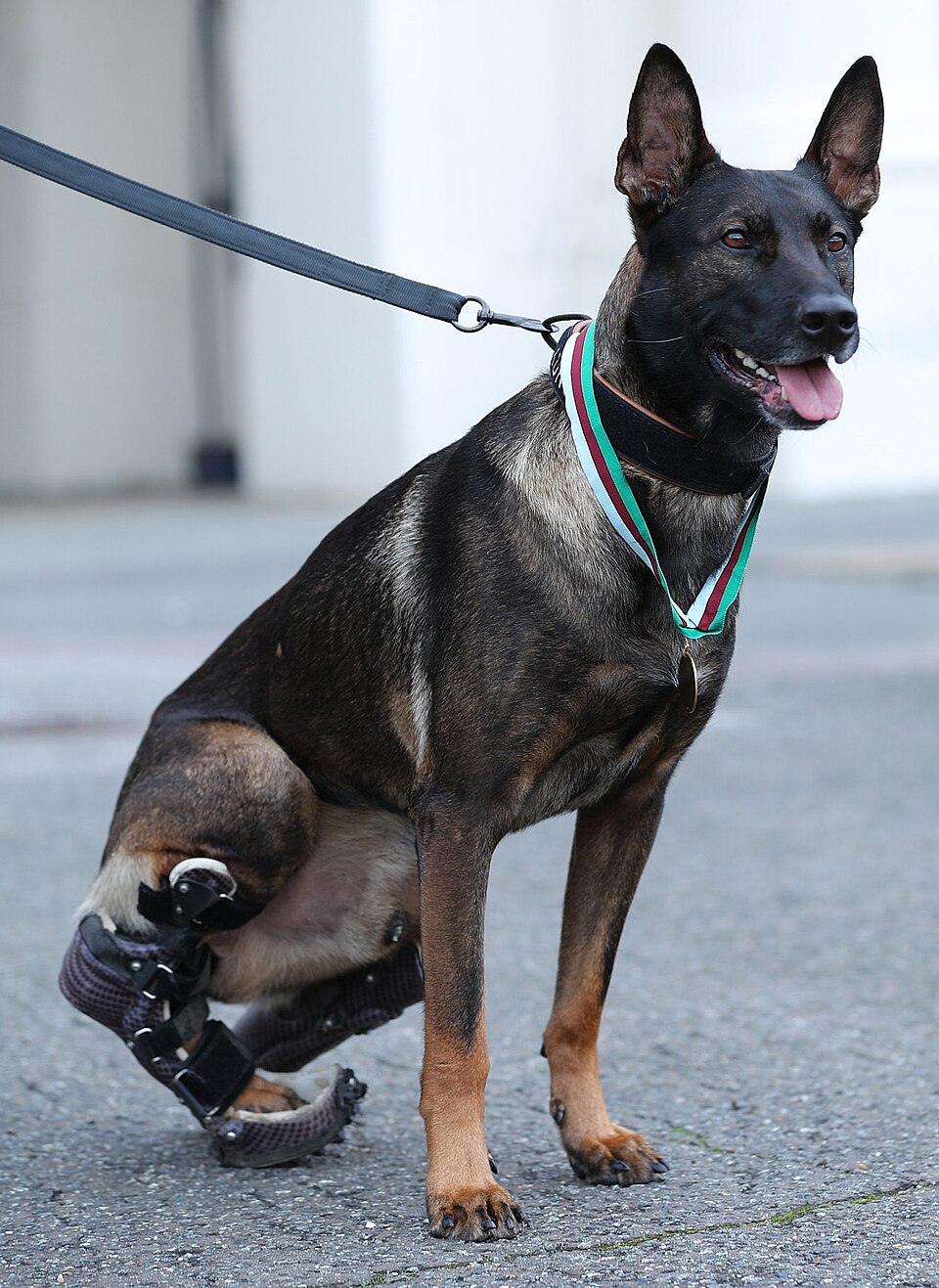
More recently, in May 2019, Kuno was deployed on an operation where the enemy was expected to be well armed, well prepared and willing to fight to the death. Kuno and his handler were among the first off the helicopter. As he raced across the open ground towards the compound, they immediately encountered a burst of machine gun fire. Kuno was released to incapacitate an insurgent. He did so successfully and then switched focus to detection soon discovering a variety of hidden weapons and explosives in the compound.
Suddenly, several grenades detonated in close proximity to the team and a burst of machine gun fire came through the doorway. Pinned down, the assault force was unable to move without sustaining casualties. Kuno did not hesitate and raced through the doorway to attack the insurgent. Unfortunately, several rounds found their mark and Kuno received bullet wounds to both hind legs. Undeterred Kuno launched himself at the insurgent biting his arms and wrestling him to the ground. His actions undoubtedly saved the lives of multiple coalition soldiers.
Kuno’s injuries were life-changing and his rear paw could not be saved and was amputated soon after. His actions warranted the highest recognition and the PDSA Dickin Medal.
The RAVC Today
Today the role of the Royal Army Veterinary Corps (RAVC) continues to be an important part of the Army ensuring that military working dogs are fit, healthy and ready to carry out their duties. The 1st Military Working Dog Regiment provides specialist dogs and handlers for a variety of roles including the search for explosives, high assurance searches of vulnerable areas and patrol duties including sentry duty and apprehension of intruders. Their extensive training allows these dogs to be deployed on operations, exercises and major events where their ability to detect threats helps provide an important layer of protection to soldiers and the public.
The RAVC also plays an important role in their care with Veterinary Officers and Veterinary Technicians providing routine and emergency veterinary treatment. This includes dental and weight checks, wound care and physiotherapy as well as providing advice on best care of dogs in different environments around the world.
The relationship between the handler and the dog remains an important part of their effectiveness with handlers trained to recognise when their dog is unwell or injured and have the abilities to perform veterinary first aid as a first response. This means the welfare of the dog is considered not only when it is in the veterinary clinic, but every time it is working alongside its handler.
The role of the RAVC today is about ensuring that the dogs that serve alongside the Army are properly trained, cared for and protected throughout their service, including a rehoming programme for retired working dogs.
From the dogs used for the first time in the First World War to the military working dogs of today the role of the dog continues to play an integral part in the effective functioning of the British Army and perhaps most importantly have played an important role in companionship for soldiers in conflict far from home and loved ones.
Military Working Dogs
Military Working Dogs


Military Working Dogs
